Rafia Saleh
Rafia is studying computer science at the Carleton University in Ottawa, Kanada. She is supporting us for 10 weeks and investigates the use of generative artificial intelligence in the context of industrial machine parameter optimization.
ARRIVAL
How was the arrival at the Institute?
My arrival at the Institute went very well! I was greeted by my supervisor at Düsseldorf Airport. Before heading to the residence, I was shown around the city a bit and headed to the grocery store to grab some necessities, which turned out to be important as supermarkets in Germany are closed on Sundays. I was dropped off at my residence on campus, where I settled in before starting at the Institute. Arriving at the Institute on my first day was very welcoming. I got a tour of the building and met other researchers at the Institute! The onboarding process was smoother than I expected, and overall made the transition to a new country less daunting!
How did you get accepted at the Institute?
I applied through the RISE DAAD Program, which offers internships to students in North America at Institutes and Universities across Germany. I initially applied through the portal and looked at projects that I was interested in. I got in touch with Antonin to meet online and discuss the project, where I learned more about GenISys and TMDT. The overall process took a few months, but after submitting my application and necessary documents, I was contacted and told that I got selected for the project!
How did you get supported?
My research internship was funded by Mitacs' Globalink Internship Award for Canadian students pursuing international research experiences. This funded my stay, the RISE Heidelberg Conference travel and travel to Germany.
What do you like about TMDT, what don’t you like?
My experience at TMDT was great! As the research environment is very new to me, considering this is my first research experience, I was naturally a little nervous and did not know what to expect. What I liked was the level of independence given to me to think critically and make decisions about my work, but also have access to support. Whenever I was stuck or needed guidance, it was always available from my supervisor. I was always able to ask questions, discuss and come up with solutions or a road map for my work. The balance between independence and support was very appreciated. One thing I found difficult was adjusting to open-ended research, as you can sometimes spend days exploring a topic or problem. Sometimes you may not know what the answer looks like, and it’s important to be able to re-focus or adjust your plans based on results. Learning to be comfortable with uncertainty was challenging but very rewarding in the end. Overall, TMDT gave me a taste of what research looks like in practice!
SCIENCE/RESEARCH
What was new in your studies?
This project introduced many new concepts to me. I had not previously worked with the transformer architecture, so implementing an adapted transformer model was a new and exciting experience! It was rewarding to learn how to build a full training pipeline with an automated hyperparameter search, something I had not done before. Not only that, I was able to apply and deepen my knowledge of Python in a practical setting by implementing metrics and evaluation notebooks. Furthermore, working with a real and complex industrial dataset from the filling machines was very different from the ones I have used in an academic setting. Overall, these new concepts pushed me to think more deeply about all aspects of this project, including building a model, making informed decisions, and questioning evaluation.
What did you learn? Any surprises in your research context?
This whole experience was full of learning. Every day I was learning something new, whether it was through research or even trying to debug or solve a problem. I learned about the practical challenges of machine learning that you often don’t encounter in courses. An important aspect I learned was how to approach these problems and learn ways to solve them methodically. Debugging a machine learning pipeline differs from regular code, as it requires an eye for detail in calculations and a thought process that I hadn’t previously practiced.
What is the biggest difference between your hometown and Wuppertal?
A big difference between my hometown and Wuppertal is the Schwebebahn, the suspended rail that runs above the river. This doesn't exist in my hometown, and it showed me how differently cities engineer their transportation! The overall urban landscape and natural environment are also different, as the city is built on a low mountain range, with many hills and forests. I really enjoyed watching the sunset from a viewpoint hill at the university; it will definitely be missed!
LEISURE TIME
Where did you stay?
I stayed at the University of Wuppertal residence buildings, Neue Burse, in a private bedroom/bathroom apartment. The accommodation was comfortable and well-suited for a short-term stay. The location was very convenient for me as the bus stop stood right across from the apartment, making it easy to commute to Campus Freudenberg and back. The apartment had everything I needed, including a kitchen, refrigerator, stove, and storage to store my belongings.
Unfortunately, the room does not have AC, which made it difficult during the heatwave, so investing in a fan helped. It was a good base for my time in Wuppertal and made the transition to living in the city much smoother!
What did you do outside of work?
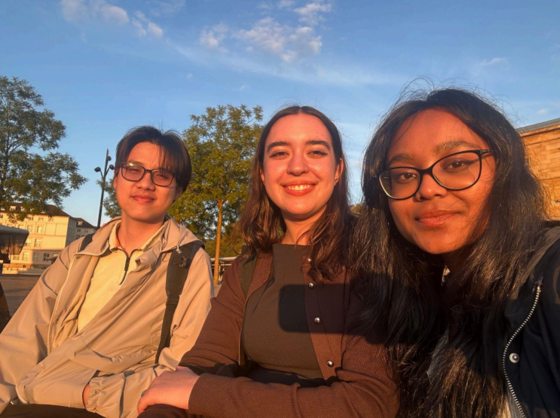
Outside of the office, I would try my best to make the most of my time by exploring Wuppertal and travelling to other countries and cities nearby where I could. The university connected me with a tutor who shared an international student group chat with me, which made it easier to get to know other students living in the city!
Throughout the week, I would attend events hosted by the international student group team, which was a great way to meet new people, socialize and experience life beyond the university campus. Almost every weekend I would travel to other parts of Germany or even outside the country, as transportation is well established and it only takes a few hours to travel to neighbouring countries! The combination of work and exploration made for a well-rounded experience.
What was the best trip during your stay?
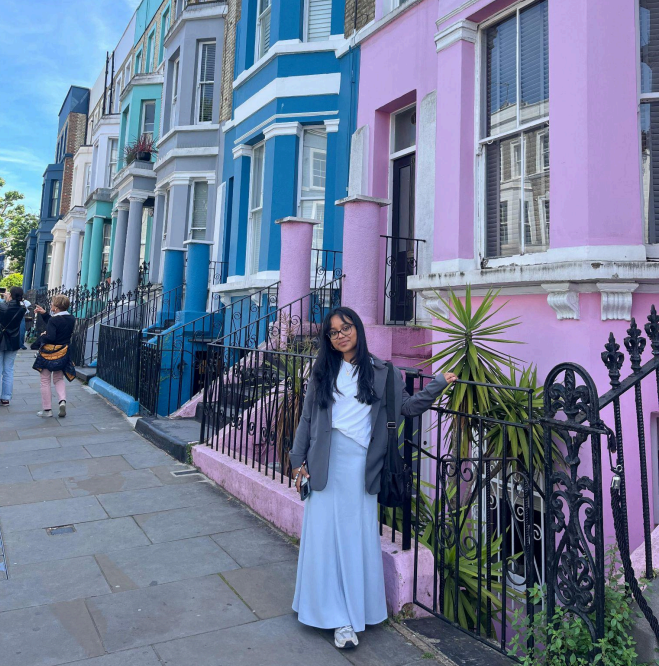
The best trip during my stay was London, UK! Even though it is outside of Europe, it was very easy to fly there as it only took 1.5 hours from Düsseldorf Airport, making it accessible for a weekend trip. I was able to see the city, visit famous landmarks and even visit Oxford University.
London is full of history and culture, and an energy hard to describe. Every street has something interesting to see, and the diversity and scale of the city were impressive. London was definitely a highlight of my trip!
What were your first German words?
My first German words mainly consisted of greetings and everyday essentials, including ‘Danke’ (thank you), which I used constantly. I also learned ‘Mit Karte bitte’ (with card please), which is useful when shopping. For farewells, I learned that Germans often say ‘Tschuss’ or ‘Ciao’ (bye), which was very natural in conversation. A favourite German word of mine to say was ‘Aachen’ (a city bordering Belgium and the Netherlands)!
Over the weeks, I was able to pick up on more words just by paying attention to signs, menus and conversations around me. I was surprised at how much you can learn or pick up on when you’re immersed in an environment. My advice to anyone would be to pay attention to words you hear around you as you start to notice and understand context naturally after a few weeks.
Have you ridden the Schwebebahn?
Yes, I did ride the Schwebebahn, though closer to the end of my stay. It was a unique experience and something I would recommend to anyone visiting the city. I personally didn’t rely on it as it was convenient for me to just use local buses to get to where I needed to go. Since the Schwebebahn only runs through the city on a fixed route, it wasn’t a direct option for me. It's nice to get on to see some other parts of the city. I got on with a friend, watched the view all the way to the end of the stop and back. It was nice to see the city from above, above the river and see a different perspective!
What is the best food in Town?
In terms of food, I found a good balance of having meals at the Mensa (cafeteria), buying groceries from Penny/Rewe and occasionally exploring restaurants and cafes in the city. Restaurants can get quite pricey, so it was more budget-friendly to make meals at my apartment.
However, a spot for a meal and a nice view would be 60 Seconds to Napoli. It directly faces the Schwebebahn tracks, so you can sit and enjoy a nice meal or drink while watching the trains pass above you. I would also recommend going towards the Luisenviertel, a street with different shops and cafes. It has old-town charm, and it’s a great place to wind down with friends and hang out!