James Bui
James is studying computer science at the Denison University in Ohio. He is supporting research in computer vision for 9 weeks. Specifically, he will do literature research on current methods on 6D pose estimation and investigate how to improve fine-adjustment using vision transformers
ARRIVAL
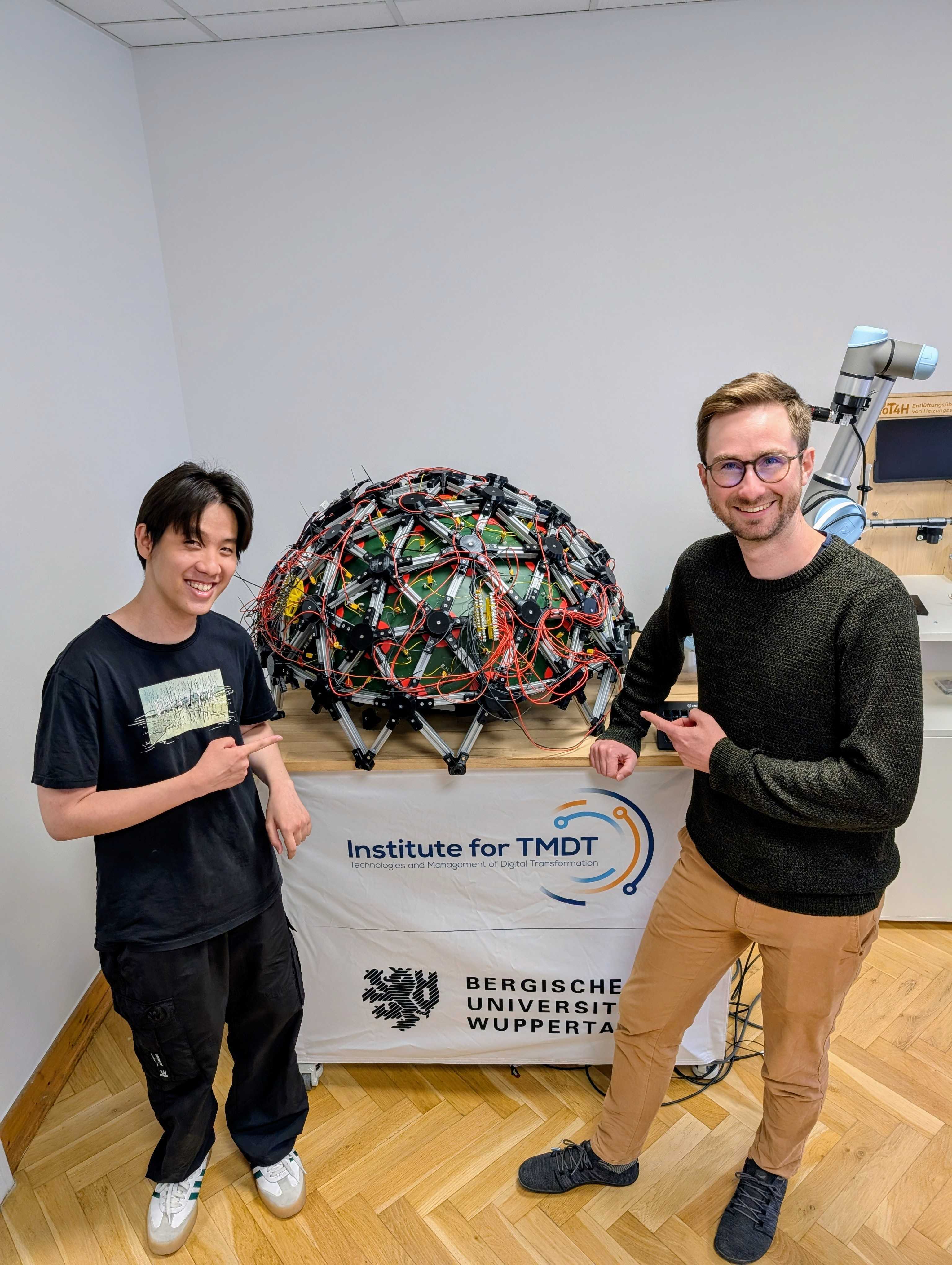
How was the arrival at the Institute?
Arriving in Düsseldorf, I was lucky to be picked up by Robert, my supervisor. He was kind enough to drive me to my apartment, and even helped me with groceries on the first day. It was a small gesture, but it made settling into a new country feel a lot less overwhelming right from the start.
How did you get accepted at the Institute?
I applied to three research projects through the DAAD RISE program and was selected by my supervisor, Robert Maack. The application process involved outlining my background and interests, and I was excited when his project on visual quality inspection turned out to be the right match.
How did you get supported?
Everyone was very supportive and kind. They helped me a lot with my research and with settling into the environment at the Institute. Special thanks to Leonard and Raphael for their help with the 3D printers, Nils for helping me understand the concepts, and my supervisor, Robert, for guiding me through the project. Whenever I had questions, big or small, someone was always willing to take the time to walk me through it.
What do you like about TMDT, what don’t you like?
I really love the flexibility of the work environment — you can work either from the office or from home. All the colleagues and PhD students here are very friendly and patient with my questions. I honestly can't think of much I disliked; if anything, I wish I'd had a bit more time to explore all the projects going on in the group.
SCIENCE/RESEARCH
What was new in your studies?
My research concerns visual quality inspection. We're using a deep learning model to detect defects and anomalies in products, which could help automate quality assurance in factories. Coming in, most of my prior experience was more theoretical, so it was new for me to work on a problem with such a direct, practical application in an industrial setting.
What did you learn? Any surprises in your research context?
I learned a lot about different model architectures through reading papers and building models myself. I also picked up some knowledge about 3D printing along the way. One surprise was how much of the work involved troubleshooting and iterating rather than getting things right the first time, which taught me patience and a more methodical approach to debugging.
What is the biggest difference between your hometown and Wuppertal?
I would say it is much easier to get around here. Public transport is reliable and well-connected, so I rarely had to worry about planning a trip far in advance.
LEISURE TIME
Where did you stay?
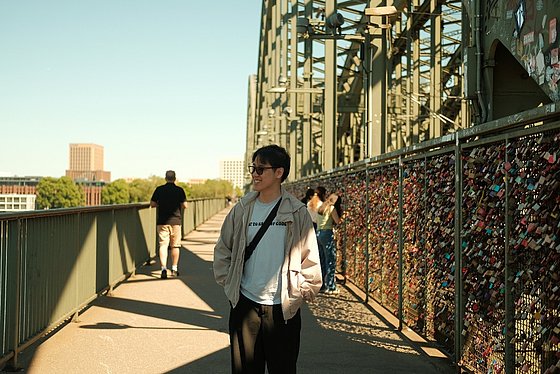
I stayed in a single apartment at Max-Horkheimer-Straße 12, close to the main campus of the Bergische Universität Wuppertal. There were plenty of activities for students — we even watched the Germany vs. Ecuador football match together. It was a great way to meet other students and feel part of a community outside of work.
What did you do outside of work?
I mostly stayed in around my apartment during the week. On weekends, I traveled to nearby cities, which gave me a good balance between relaxing and exploring while I was here.
What was the best trip during your stay?
Probably Heidelberg. It's a small town with beautiful scenery along the river, and I really wish I'd had the chance to go back and explore it more.
What were your first German words?
My first word was "Danke." It's a small word, but it ended up being one I used constantly throughout my stay.
Have you ridden the Schwebebahn?
Yes, and it was great! Riding above the city gave me a completely different perspective of Wuppertal than walking through it.
What is the best food in Town?
There's a lot of good food around here — so far, my favorite is Döner.