Gihwan (Finn) Jung
Gihwan (Finn) is studying computer science at Saint Louis University in Missouri, USA. He is supporting us for 12 weeks in researching and developing a runtime adversarial data augmentation pipeline for state-of-the-art LiDAR-based 3D object detection models for autonomous driving.
ARRIVAL
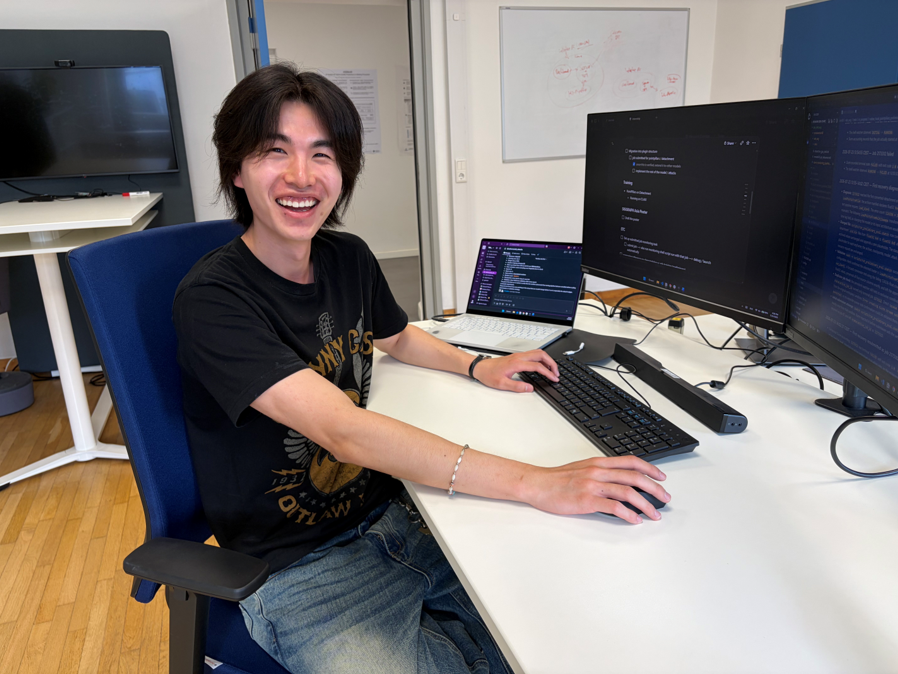
How was the arrival at the Institute?
I arrived at the institute on the same day that I arrived in Germany. My advisor, Adwait, welcomed me, showed me around the institute, and introduced me to the people I would be working with. I also got my first taste of university life in Germany by having lunch at the Mensa.
My first impression of the institute was that it was very peaceful. The campus is located up on the hill and was especially quiet, which made it feel like a great environment to focus on research and work. It was also very convenient to get there from my dorm, since I could take Bus 603 directly to the university.
How did you get accepted at the Institute?
I applied to the institute through the DAAD RISE Germany program. As part of the application, I looked through the available research projects and ranked the ones that matched my background and interests most closely. I already had experience working with 2D object detection, and Adwait’s project focused on 3D object detection, so I saw it as a natural opportunity to build on what I already knew while moving into a new research area.
After submitting my application and project preferences through DAAD RISE, I was notified around March that I had been selected for the project at TMDT.
How did you get supported?
My stay was funded entirely through the DAAD RISE Germany program. One thing I especially appreciated was how convenient the university system made the practical side of the stay. I did not have to search for housing on my own, since student accommodation was arranged for me.
The dorm was already equipped with the basic furniture and everyday necessities I needed, including cooking facilities and utensils. That made the transition much easier, especially since I had just arrived in a new country and could settle in without having to organize everything from scratch.
What do you like about TMDT, and what don’t you like?
What I like most about TMDT is the flexibility of the research environment. You are given a clear overall goal, but the way you approach that goal is largely up to you. There is no rigid day-to-day structure or pressure to work in a particular way, as long as you can show meaningful progress. I found that this gave me a lot of independence and made the experience feel much closer to real research.
One limitation is that the professor is extremely busy, so interns do not get many opportunities to interact with him directly. However, this is understandable, and the PhD students are very accessible and willing to help whenever questions or problems come up.
SCIENCE/RESEARCH
What was new in your studies?
One of the biggest new experiences for me was working with high-performance computing at a much larger scale than I had before. I worked with NVIDIA H100 GPUs and very large autonomous-driving datasets, which gave me a better sense of what it is like to run computationally intensive AI research in practice.
3D object detection itself felt like a natural extension of the computer vision and AI work I had already done, but working with LiDAR data and much larger datasets was new to me. I was also introduced to adversarial attacks, which was a completely new research concept for me and became an important part of my project.
What did you learn? Were there any surprises in your research context?
A major thing I learned was how to work effectively with an existing research codebase rather than building everything from scratch. Much of my project was based on MMDetection3D, so I had to understand how a large and complex framework was structured before I could modify it for my own research.
I also learned a lot about collaborative research software development. It was important not only to make my code work, but also to write it in a way that was readable, organized, and easy for my colleagues to understand and modify later. That was a different mindset from writing code only for my own use, and it was one of the more valuable practical lessons from the internship.
What is the biggest difference between your hometown and Wuppertal?
One of the biggest differences for me was how accessible international travel is from Germany. Compared with both South Korea and the United States, so many different countries and cultures are only a few hours away. During my stay, I could spend the week focusing on research and then use my free time to visit different cities and countries. Being able to experience so many cultures while also completing a research internship was one of the most valuable parts of living in Germany.
The transportation system makes this possible in theory, although I also quickly learned that Deutsche Bahn does not always make the journey as smooth as planned!
LEISURE TIME
Where did you stay?
I stayed at Neue Burse in a single-room apartment. The room was very cozy and had everything I needed for living on my own, including a private bathroom, kitchen, and refrigerator. For one person, the space was more than sufficient and made it easy to feel settled during the internship.
The only downside was that there was no air conditioning, which could be a little difficult during the hotter summer days and heat waves. Aside from that, it was a very comfortable place to stay.
What did you do outside of work?
During weekday evenings, I usually went to the gym and sometimes continued working on my research afterward. On weekends and during other free time, I tried to travel as much as possible and take advantage of how well connected Germany is to the rest of Europe.
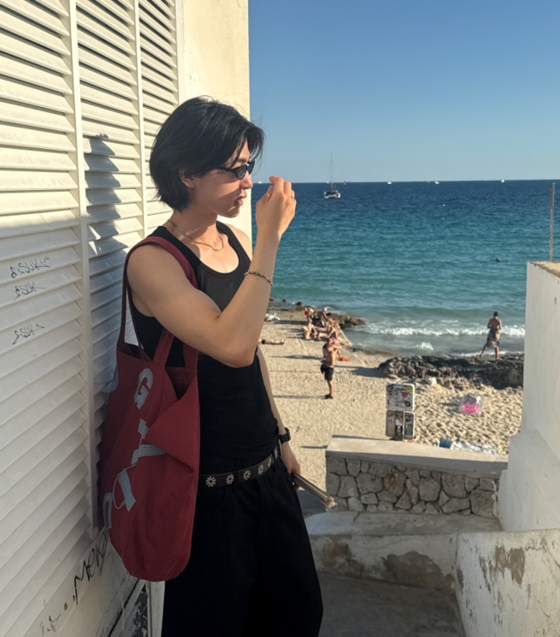
During my stay, I visited places including Zurich, London, Munich, Warsaw, Palma de Mallorca, Heidelberg, Amsterdam, Berlin, and Paris. Being able to combine a serious research experience with the opportunity to explore so many different cities and cultures was one of my favorite parts of the summer.
What was the best trip during your stay?
My favorite trip was Amsterdam. The entire city felt almost like a preserved historical snapshot, with its canals, old buildings, and narrow streets and alleys. At the same time, there was always something to do. I especially enjoyed the thrift-shopping scene, the cafés, and simply walking around and exploring different neighborhoods.
I also really liked seeing the quieter areas outside the city center, which were very beautiful and had a completely different atmosphere. One very specific recommendation from the trip is a paprika-flavored chip called “Heartbreakers” — definitely worth trying! Amsterdam was also very convenient to reach from Wuppertal, which made it a great destination for a short trip during the internship.
What were your first German words?
My first German words were mostly practical ones that I needed for everyday life: “Hallo,” “Danke,” “Bitte,” “Entschuldigung,” “Tschüss,” “Guten Morgen,” “mit Karte, bitte,” and other simple phrases for shopping, ordering food, and getting around.
I also quickly learned to pay attention to railway announcements such as “Information zu ICE 124 nach … Hbf über … Hbf, Abfahrt …” at the Hauptbahnhof. Deutsche Bahn makes these announcements often when platforms, departure times, or connections change, and if you are not paying attention, you can easily miss your train. I learned that lesson the hard way twice!
Have you ridden the Schwebebahn?
Yes, I rode the Schwebebahn several times. It is definitely one of the most unique things about Wuppertal, and the view is very beautiful the first few times you ride it, especially as it follows the river through the city.
That said, it can get quite crowded, so my personal recommendation is to enjoy the experience once or twice and then use the regular buses when they are more convenient!
What is the best food in town?
My recommendation is not really a specific restaurant: go to Penny, buy some bread and yogurt, and you already have an easy source of carbohydrates and protein for very little money.
I found it much more worthwhile to keep weekday food simple and inexpensive, then use the money I saved on groceries for weekend travel. For me, that gave much more value than regularly eating out in Wuppertal.