Cristina Lopez Mendoza
Cristina is studying computer science at Mount Holyoke College in South Hadley. She is supporting us for 12 weeks in researching and evaluating state-of-the-art production optimization using Deep Reinforcement Learning.
ARRIVAL
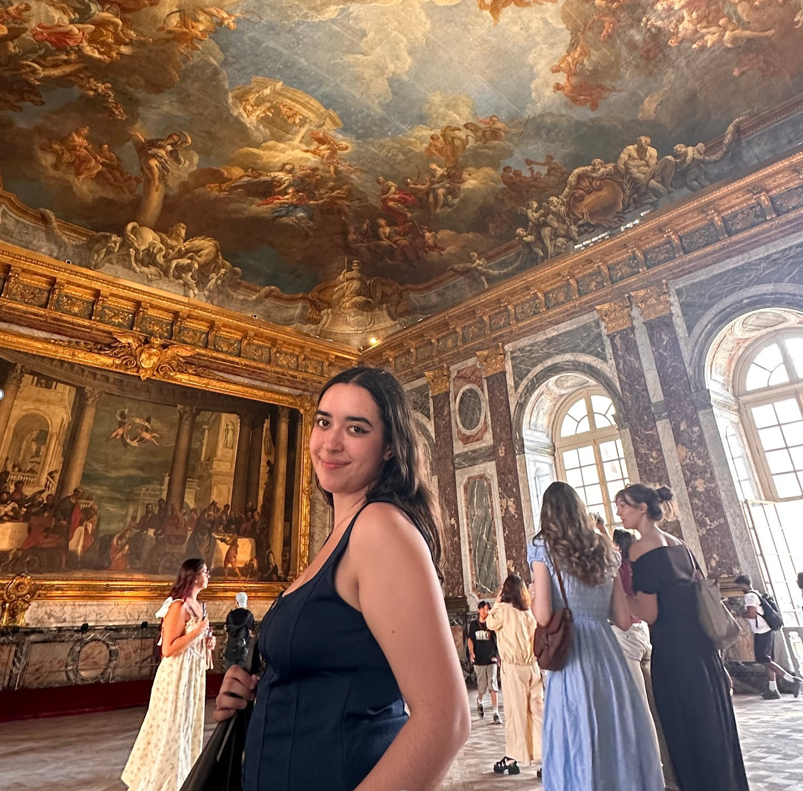
How was the arrival at the Institute?
It was really nice and smooth, both arriving in Germany and at the Institute. My supervisor, Dustin, guided me a lot in both of them; he picked me up at the airport and instructed me on how to arrive at the institute. As students, we get the deutschlandsemesterticket, which lets us travel in buses and local trains; at first, I was a bit scared of taking the bus, since I was by myself and I wasn’t familiar with the language, but after one or two times it gets easier and more comfortable. The Institute was one bus away from the apartment I was staying at.
How did you get accepted at the Institute?
I applied through DAAD RISE around October of 2025, and I received the acceptance notification in early March.
How did you get supported?
My monthly stipend was covered by my college, Mount Holyoke, through the lynk funding. DAAD gave me a travel stipend that allowed me to buy the airplane tickets as well as the train to the conference in Heidelberg. My supervisor helped me with all the process, whenever I needed some travel documents, finding an apartment, and setting everything up, like the deutschlandsemesterticket and the student id.
What do you like about TMDT, what don’t you like?
I really liked the work environment. For my project, I usually received new tasks whenever I finished the past ones instead of having a fixed deadline. Whenever I had questions about the code or about the project in general, I could ask anyone from my supervisor’s team and they always helped me and supported me. I also liked to get to know the other phd students. Everyone in the office shared the same kitchen, so whenever we went to get coffee, we could talk to the people that were there too and get to know about them.
SCIENCE/RESEARCH
What was new in your studies?
Learning about resched, which is a framework of reinforcement learning. I had some experience before with reinforcement learning, but this was my first time training and testing an actual model, especially with a framework that was released this year. Because of that, we had to do a lot of literature review before starting to code.
What did you learn? Any surprises in your research context?
I learned more about the difference in the performance of some algorithms using the same instances and the influence the features of the instances have on the behavior of the model. I worked with the RESCHED ML model to solve the Flexible Job Shop Scheduling problem using different datasets, like Brandimarte or Hurink. There are several pretrained models based on the size of the problem (like 10 jobs x 5 machines, 20 jobs x 10 machines, among others), and it was surprising to see the difference between the performance of different trained models using the same instance. For example, when testing with the Hurink dataset (which is divided by edata, rdata and vdata), the only difference between those three categories is the flexibility on the machines, but the performance of the model is different.
What is the biggest difference between your hometown and Wuppertal?
I’ll definitely say nature. The place where I’m from in Mexico barely has trees, it’s mostly buildings and houses, so it was really nice looking around and seeing green everywhere. There are also a lot of different birds here. I remember one time I was in my apartment and I heard a bird singing, I thought it was a phone alarm of another student in the building, but then I realized it was an actual bird outside.
LEISURE TIME
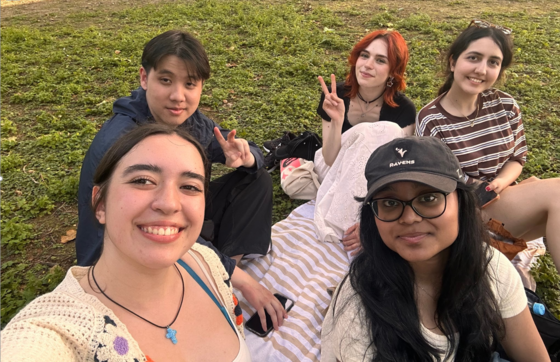
Where did you stay?
I lived in the international dorm next to the University. We had our own apartment with kitchen and bathroom. The location and the view from the apartment were really nice!
What did you do outside of work?
I usually did something with my friends, the other interns. On the weekend, we usually travelled somewhere, like Dusseldorf, Bonn, Cologne, and we also travelled outside the country, we went to Brussels, to Paris, and I did a solo trip to Amsterdam. We tried to travel as much as possible to see around and have our Eurotrip.
What was the best trip during your stay?
I’ll definitely say the first time I went to Dusseldorf. During our first week here, we heard of Japan Tag, an event celebrating Japanese culture. That happened in our first weekend here, and the other interns and I went there and met new people. We had some matcha ice cream, walked around, ate döner for the first time, and around 11 pm there were some fireworks. It was the perfect end of our first week here.
What were your first German words?
Before coming to Germany, I learned the common expressions, like “hallo”, “guten morgen”, “bitte”, “danke”, “tschüss”, “ja”. I got the chance to practice when I went to Penny market the first time, where I could practice “hallo”, “Mit Karte bitte”, “ja” (when they ask if I want the receipt), and “tschüss”
Have you ridden the Schwebebahn?
I did! When I first arrived at Wuppertal, it was one of the very first things I saw and it was amazing. But I actually rode it on my last day in Germany. Totally worth it.
What is the best food in Town?
Anything that has or is accompanied with buns. The buns in the United States are way different, and I usually don’t like to eat them there, but when I found these types of buns here, I was so excited because it’s the closest to the ones we have in my hometown in Mexico; we call them “bolillos”. Whenever I had the chance, I bought them and cooked them with butter, garlic, beans, etc.