Human Experience Design
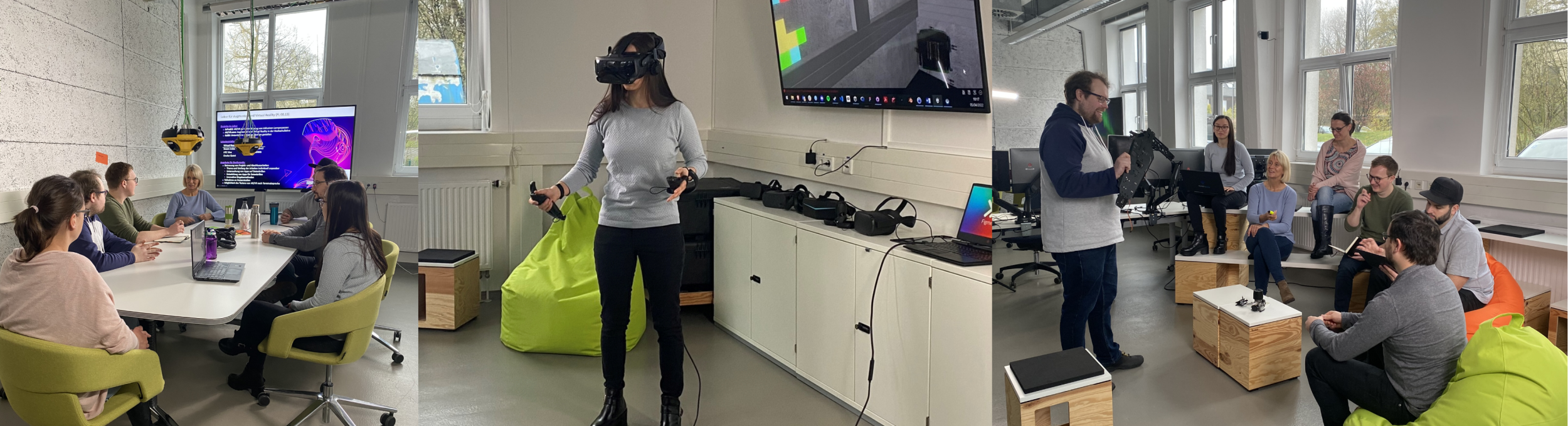
The goal of the Human Experience Design (HXD) research area is to ensure human autonomy in an increasingly digitized and automated world. Accordingly, we design, evaluate, and implement technical systems in such a way that humans are not passive users or mere data providers, but remain active, informed, and in control.
By combining psychological insights, educational concepts, and innovative technological developments, we create environments that enhance human capabilities.
Against this backdrop, we focus on the following areas of activity:
Immersive Future
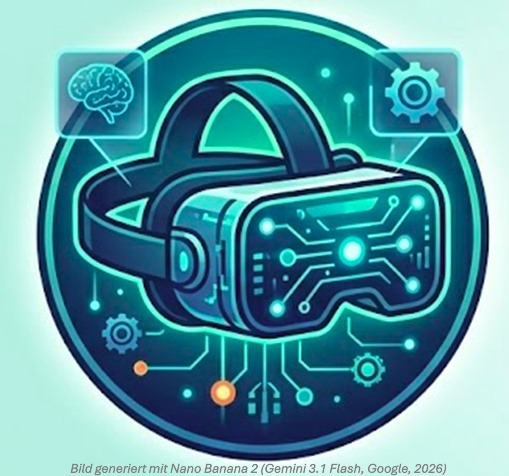
Immersive Technologien wie Virtual und Augmented Reality ermöglichen neue Formen der Visualisierung, Simulation, Kollaboration und Wissensvermittlung – insbesondere bei komplexen Fragestellungen.
In Kombination mit Künstlicher Intelligenz modellieren wir dynamische Szenarien, die als Trainings- und Experimentierräume genutzt werden können. Ziel ist es, komplexe Zusammenhänge verständlich aufzubereiten, individuelle Lernprozesse zu fördern und den Zugang zu digitalen Technologien zu erleichtern. Grundlage ist ein konsequenter Human-Centered Design Ansatz, der Nutzer*innen in alle Phasen der Entwicklung einbindet und so Akzeptanz, Nutzbarkeit und Wirksamkeit sicherstellt.
Zentrale Forschungsfragen:
- How can AI and immersive media be combined to create dynamic scenarios?
- What requirements must human-machine interfaces meet to enable effective interaction in AI-supported immersive systems?
- How can complex data and processes be presented in a way that is understandable and actionable through immersive visualization?
- What pedagogical concepts are necessary to integrate immersive technologies sustainably into education and professional development?
- How can quality, transparency, and trust in AI-supported immersive applications be ensured?
- How can digital representations of real objects be created in a low-threshold and resource-efficient manner?

Information Security Awareness
Information security should not be viewed as a purely technical challenge; it arises from a complex interplay of technology, people, and organization. Human behavior, as a key component within this system, can contribute to both enhancing and compromising security. Accordingly, users must be actively incorporated into security strategies, just as technical and organizational measures are.
Information Security Awareness refers to people’s awareness, attitudes, and specific behaviors when dealing with information, IT systems, and digital threats.
Zentrale Forschungsfragen:
- In the context of information security awareness, what is the relationship between security-related knowledge, individual attitudes, and actual security behavior?
- What security requirements arise within organizations, and how can these be addressed and met in a sustainable manner?
- What interventions improve safety behavior among different target groups and help maintain awareness over the long term?
- How can training and communication initiatives be integrated into organizational structures and work processes to achieve lasting results in strengthening information security awareness?
AI-Evaluation – Human in the Loop:
AI Evaluation – Human in the Loop:
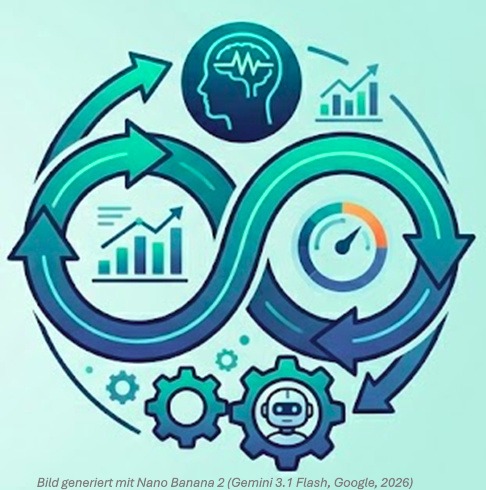
Artificial Intelligence (AI) should not be viewed as an isolated, purely algorithmic process capability. Rather, it should be regarded as an integral part of socio-technical work and living environments. This field of research focuses on the intelligence of the overall system—particularly in its interaction with humans. Key foundations include context-specific requirements for AI applications as well as regulatory and ethical guidelines such as the European Union’s AI Act and the UNESCO Recommendation on the Ethics of Artificial Intelligence.
Zentrale Forschungsfragen:
- How can we design AI systems in a human-centered way that combines trust, acceptance, and ethical integrity?
- How should explainable AI mechanisms be designed so that both laypeople and experts can understand the basis for an AI system’s decisions?
- What factors, beyond technical accuracy, determine the long-term acceptance and perceived usefulness of AI applications in specific contexts?
- What design criteria can effectively minimize the risk of algorithmic bias in decision-making processes?
- What impact does the long-term use of AI applications have on individual skills?