iustitiAI
AI-powered detection and legal prosecution of online hate speech to relieve the burden on the judicial system and protect victims – iustitiAI
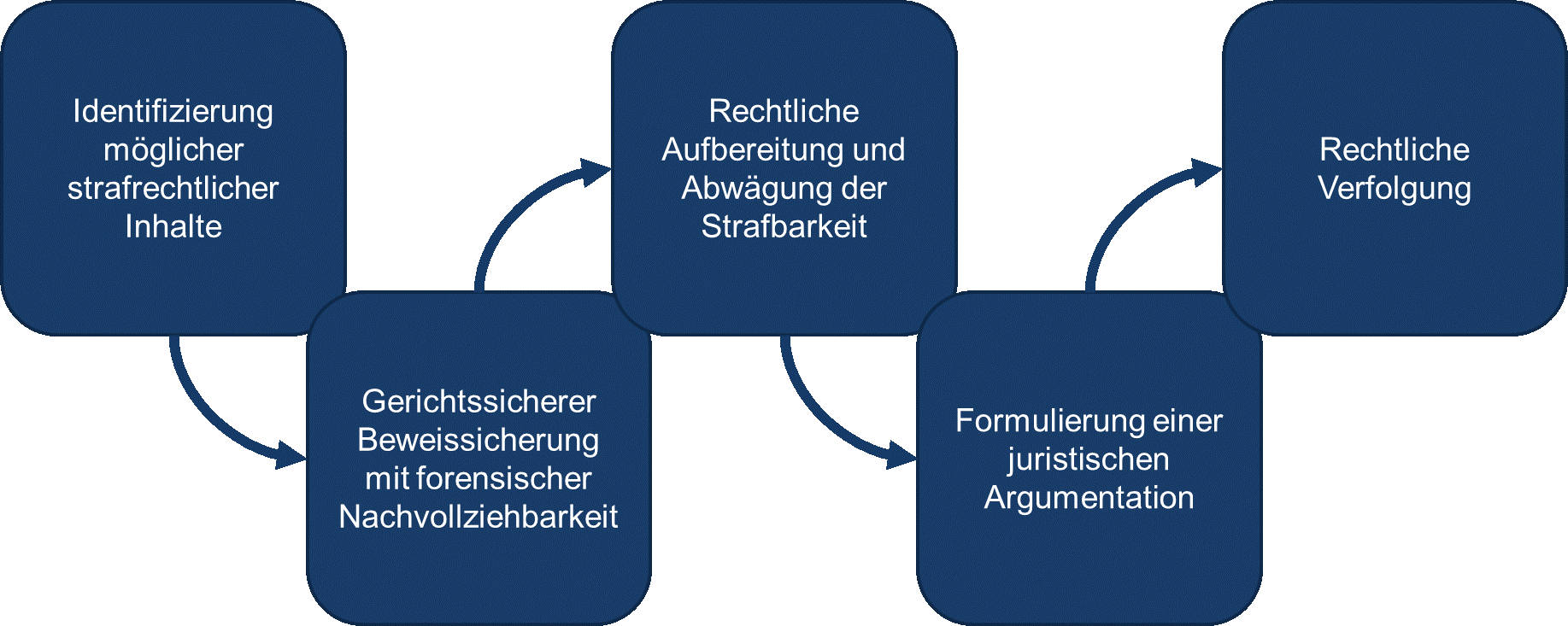
Process for the IustitiAI Tool Suite
The internet offers an unprecedented space for social discourse, but it is increasingly being tainted by hate speech and insults. Currently, identifying and prosecuting such content is often a laborious and manual process, which leads to massive delays given the sheer volume of data on social media platforms. This not only places a burden on prosecutors and courts but also makes it considerably more difficult for victims to enforce their rights in a timely manner. Since the internet is not a legal vacuum, there is an urgent need for scalable, digital solutions that protect those affected and make law enforcement more efficient.
The goal of the iustitiAI project is to develop an AI-based suite of tools for the highly accurate detection of hate speech and for initiating automated legal action. In collaboration with soDone GmbH from Rheine, a system is being created that will benefit various stakeholders: government agencies such as courts and public prosecutors’ offices are to be relieved of some of their workload through intelligent pre-filtering. Lawyers will receive tools to represent clients more quickly and effectively, while social media platforms can use the technology to precisely identify illegal posts. A central focus is on protecting those affected while simultaneously safeguarding freedom of expression through a nuanced AI analysis.
The TMDT’s research focuses on developing modern natural language processing models for semantic and contextual text analysis. This involves the use of large language models (LLMs), which are specifically “grounded” through the integration of knowledge graphs. By enriching these models with domain-specific knowledge, such as relevant court rulings and legal definitions, precise identification of linguistic nuances, irony, and complex structures of insults is made possible. Particular attention is paid to the development of robust classification algorithms that create a legally sound basis for automated evidence preservation, thereby bridging the gap between technological precision and legal admissibility.